
A Complete Guide to Size and Selection
Curved linear grilles and diffusers are an excellent way to deliver heating and cooling into a space without sacrificing the aesthetics of the architectural design. But when it comes to purchasing and installing these specialized products, it can be challenging to accurately capture the curvature of the surface.
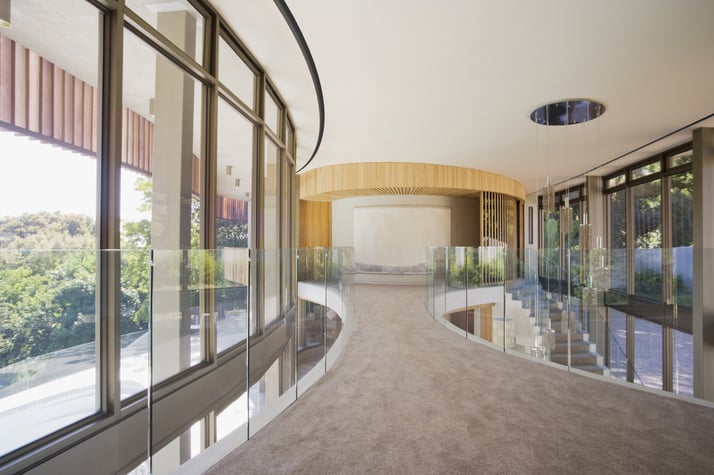 |
| Price's Custom Flow Architectural Slot Diffusers, seen here matching the curve of the window, install seamlessly into almost any space |
Ultimately, accuracy boils down to a set of critical parameters. In an ideal situation, we can gather the information we need with on-site measurements – but depending on the project, we may need to use shop drawings or construction documents as a backup. In this post, we’re going to walk you through what you need to know to get the best fit.
Choosing a Model and Orientation
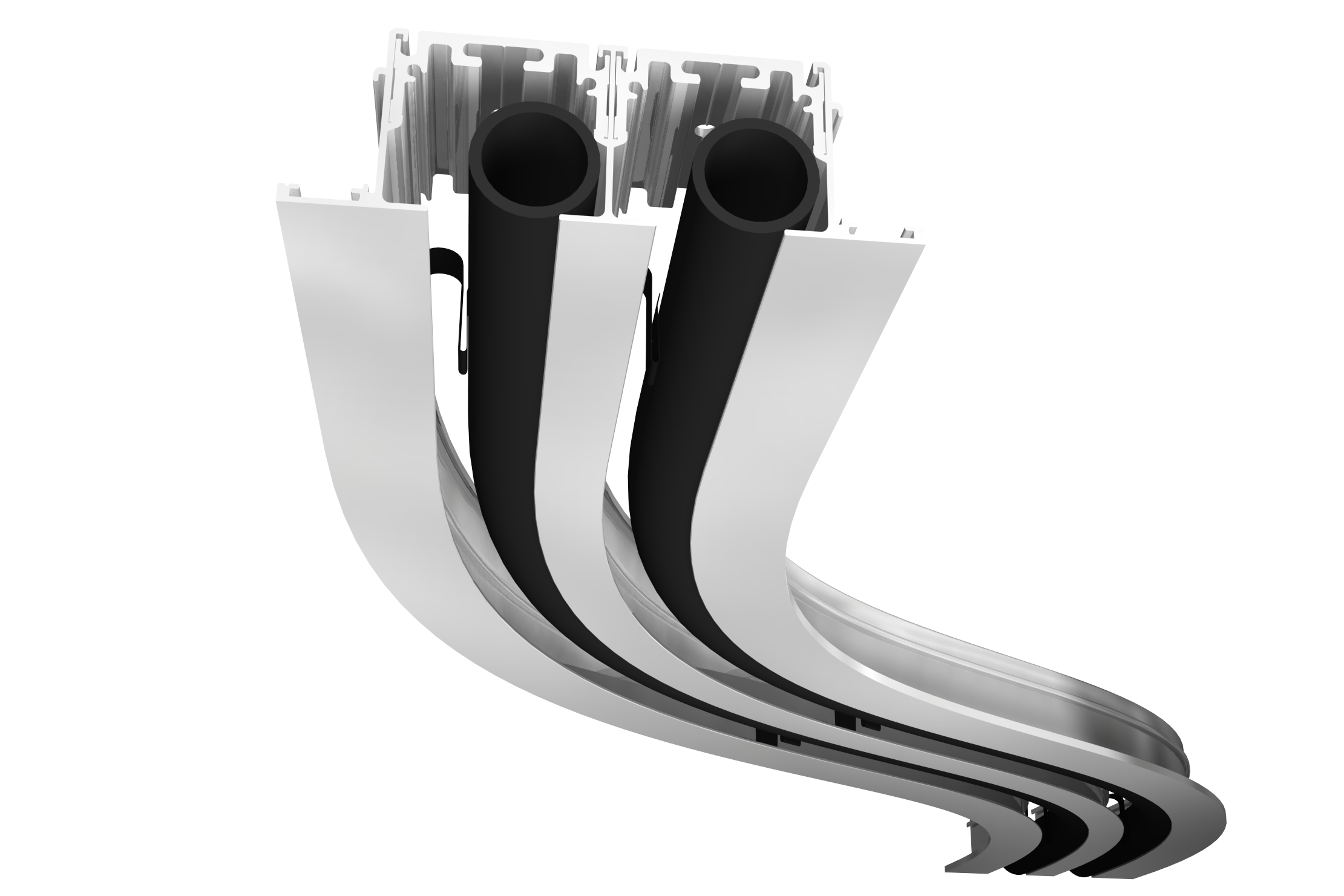
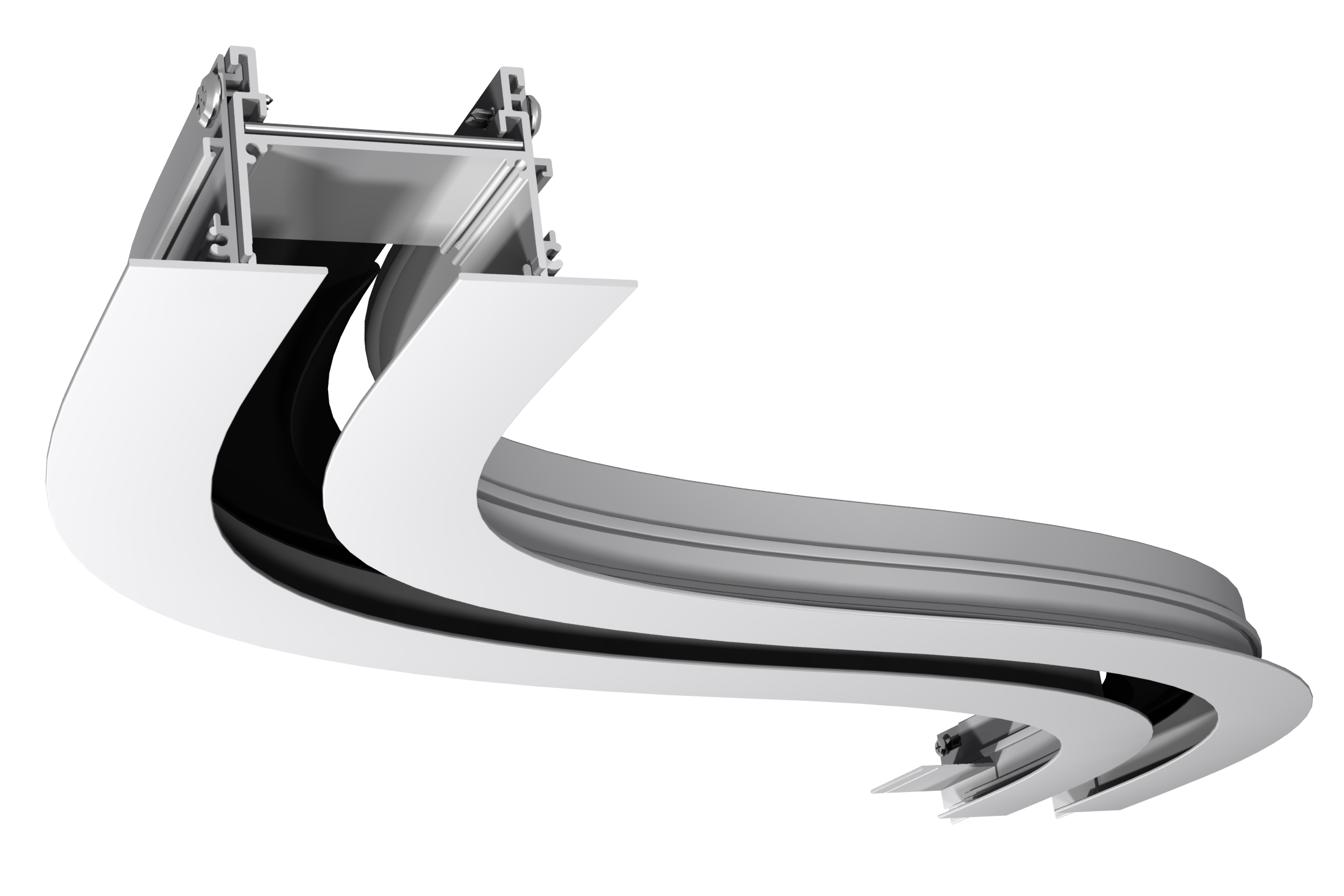
Price offers three models of curved linear grilles and diffusers: Linear Slot Diffusers, Custom Flow Architectural Slot Diffusers and Linear Bar Grilles with mandrel tubing.
In addition to selecting the model type, it is important to identify the proper curve orientation to ensure the grille or diffuser aligns with the mounting surface. The three orientations to consider include flat face, concave and convex. (Note that the Linear Slot Diffusers are available with a flat face only.)
 |
 |
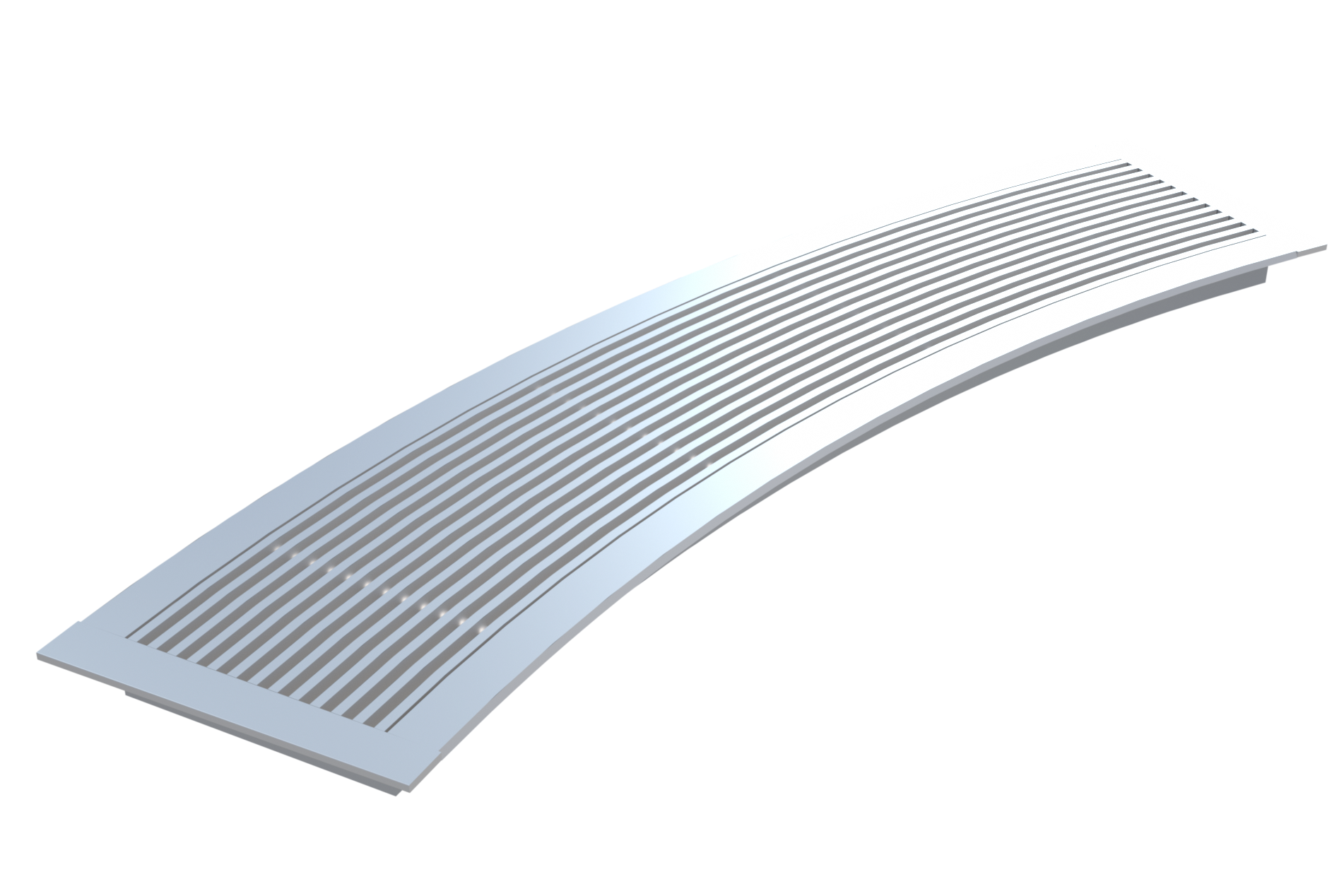 |
| Price’s curved linear grilles and diffusers offering includes the Linear Slot Diffuser (left), Custom Flow Architectural Slot Diffuser (center) and Linear Bar Grille with mandrel tubing (right) | ||
Measuring the Dimensions
Once the model type and curve orientation are selected, the next step is finding out the curvature dimensions for a precise fit. There are five key dimensions that define the geometry of a curve: radius, arc length, rise, chord length and angle.
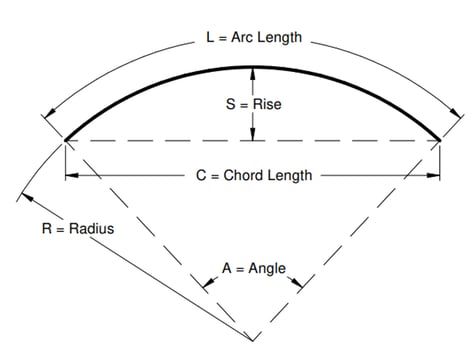 |
| Five dimensions, illustrated above, are needed to determine a curve’s geometry |
To order curved linear grilles or diffusers from Price, you will need radius and arc length. For concave and convex orientations, if you’re missing one or both of those dimensions, don’t worry – our GRD Curve Calculator can fill in the gaps! This tool calculates the missing dimensions as long as you have at least two out of the five dimensions.
For curves with a flat-face orientation, it’s important to include the radius as well as to note the reference point of where the measurements were taken (for example, from the inside, outside or centerline of the opening).
Taking Field Measurements
Measuring the radius and arc length of the curvature can be challenging and even impractical in some instances. A simpler, more reliable approach is to measure the rise and chord length, both of which are straight-line dimensions and are much easier to measure. Once you have these measurements, you can use the GRD Curve Calculator to obtain the remaining dimensions.
It is worth noting that as the complexity of the curvature increases, it often consists of multiple sections with varying radii and arc lengths. In such cases, obtaining detailed measurements is essential to achieve seamless fit and proper installation in the field.
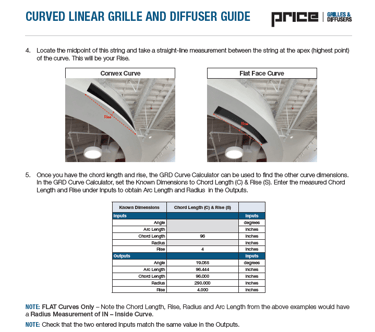 |
| Click the image to access our new curved linear grille and diffuser guide! |
For more information about how to size curved linear grilles and diffusers, check out our complete field measurement guide here. And if you have any questions about using curved linear grilles and diffusers in your next project, reach out to our team at GRD@priceindustries.com.
 |
Wille Chang is a Technical Sales Specialist with the US Sales team. He is based out of Price's facility in Casa Grande, AZ. Click here to connect with him on LinkedIn. |